
Wabi
Filters
No results found
No results match your search. Try removing a few filters.

This 6-year seed-grown Astrophytum asterias embodies quiet perfection. With its flawless symmetry, dense white trichome patterns, and soft geometric presence, it’s a striking expression of minimalist beauty.
It’s paired with a handcrafted ceramic pot from Manding Studio, featuring rich texture and sculptural form. Measuring 4” in diameter with a total height of approximately 3” including the plant, this piece is compact yet full of character — a refined harmony between nature and craftsmanship.

Unlike anything else—this 5-year-old, seed-grown Dioscorea elephantipes grows a cracked, woody caudex that resembles a tortoise shell or an ancient fossil. Its brown-gray surface forms intricate patterns, each segment telling a story of slow growth and survival. In season, it sends out thin, vining stems with delicate heart-shaped green leaves, creating a contrast between strength and softness.
Rooted in a 4" HPC pot with a 90% granular mix, it prefers bright light and a dormant cycle that echoes its native South African rhythms.
More than a plant—it’s living mythology, a sculptural oddity from the edge of time.
Plant images are for illustration purposes only. Actual plant may vary.

Sonerila sp. Starry Sky : Sonerila sp. Starry Sky is an extraordinary species out of the forests of Indonesia. These have to be kept in terrarium conditions, upon arrival it needs to immediately be placed into a terrarium to be in a high humidity environment. The colors on this species are like no others available! The foliage on this matures into a beautiful dark green that fades to almost white at the mid rib and dark pink on the leaf margins.
Peperomia antoniana : This gem is a small terrestrial species from Ecuador. Grows best in moist but well-drained substrate in high humidity and low to moderate light.
Begonia lichenora : Begonia bogneri is a charming, small creeping species from Borneo that flourishes in high humidity. It grows best on a moist sphagnum substrate with low light conditions.
Peperomia antoniana Green : Peperomia antoniana 'Green' is a rare, epiphytic or terrestrial houseplant native to Ecuador and Peru, prized for its striking emerald-green, white-speckled, round leaves about 3/4 of an inch in diameter. This "bushy" Peperomia prefers high humidity, warm temperatures, and bright, indirect light but can be finicky, requiring a moist but well-draining substrate with components like bark, perlite, and minimal sphagnum moss.
Biophytum sp. Ecuador : A species of miniature, palm-like plants native to Ecuador, known for its sensitive, mimosa-like leaves that fold up at night or when stressed. This terrestrial plant thrives in warm, high-moisture, terrarium conditions, similar to its natural habitat in marshy areas and near streams. It requires consistently moist, well-draining soil, filtered sunlight, and can be propagated by harvesting its small, often pink or purplish, seeds.
Sonerila cantonensis : Sonerila are a diverse group of plants in the Melastomaceae family distinguished by having flowers with three petals (as opposed to five for most other plants in this group). There seems to be a lot of variation within a species, and so the ID of aff. cantonensis is a guess. Sonerilas are an Asian genus that make excellent terrarium plants. This species is very robust and easily kept provided it does not dry out. It seems to be nearly always in bloom.
Philodendron sp. Loreto : The soft yellow/green foliage of this modest sized Philodendron is especially nice when complemented by the peach and salmon hues present in new growth. Native to the Iquitos region, Amazonian Peru. Will creep nicely and tightly to a background or a branch.
Peperomia sp. Dark Pongo : Peperomia sp. Dark Pongo is a modest-sized terrestrial species from the Yurimaguas lowlands of Peru. Our founding stock originated from a now razed patch of forest that stood near Pongo De Caynarachi. This species grows intermittently throughout the region. It is hard to detect with its dark foliage offering little contrast against the forest floor in the deep shade we most often have found it growing in.
Hydrocotyle sp. Northern Peru : This charming plant originates from the cloud forests of northern Peru, where it was discovered along the banks of a small roadside stream. It grows well as a terrestrial species and tolerates a wide range of light, from low to bright conditions. With adequate moisture, it will climb and spread across the terrarium floor.
Peperomia sp. Colombia : Peperomia sp. “Colombia” is a striking peperomia believed to originate from central Colombia. When grown in an open space on the floor of a terrarium, it forms an attractive, compact rosette. It thrives in a moist yet well-draining substrate. First discovered near the Buena Ventura region along the Pacific coastal rainforest, this understory species is prized for its vibrant foliage patterns, making it a standout choice for indoor plant enthusiasts.
Variety of native mosses :This rainforest terrarium is carpeted with a variety of native mosses, creating a rich, layered green landscape. Thriving in high humidity and gentle light, the mosses form a soft, natural ground cover that helps retain moisture, stabilize the microclimate, and provide an ideal habitat for plants and small organisms, bringing a vibrant and harmonious look to the entire enclosure.
Rhodospatha sp. Pink Ecuador : This compact Ecuadorian plant features softly glaucous leaves accented with delicate pink undertones. It thrives in medium to low light, making it an excellent choice for terrariums or shaded indoor settings.
Solanum uleanum : Solanum uleanum is a tropical vine native to the rainforests of Brazil, Peru, Colombia, and Ecuador. It is part of the Solanaceae family, which includes a variety of well-known plants, such as tomatoes and nightshades. This species is especially notable for its visually striking foliage. The young leaves of Solanum uleanum emerge in a vivid, almost neon purple, gradually maturing into deep green.
Asplenium sp. Chazuta : This charming miniature Asplenium originates from the Chazuta region of Peru. Despite its delicate appearance, it produces mature fronds often under 6 cm long, with new growth emerging gracefully from slender rhizomes.
Racinaea crispa : A small plant (to 6 inches) with a bulbous base and leaves which have endless twists, wrinkles and curls. Green with darker markings, sometimes almost appearing black, with a delicate yellow inflorescence.
Neoregelia rubrifolia : Neoregelia rubrifolia is a vibrant, hardy mini bromeliad native to rainforest canopies. Compact at about 6–10″ (14–25 cm), it thrives in humid terrariums or vivariums and is safe for most amphibians and tropical reptiles. As an epiphyte, it absorbs nutrients from rainwater and debris rather than soil, and shows brighter colors under strong light. Ideal for dart frog setups, its leaf cups provide natural sites for egg laying and tadpole rearing.

A rare beauty kissed by winter—Begonia ‘Snow Capped’ Variegata dazzles with its marbled foliage, each leaf brushed in crisp silvery-white like fresh snow dusted over rich green velvet. No two leaves are alike, making every plant a living work of botanical art.
Compact and dramatic, this variety thrives in bright, indirect light with consistent humidity. Its delicate variegation prefers gentle conditions and rewards attentive care with ever-evolving patterns.
Potted in a 4" HPC container with our custom aroid mix, it's a showpiece for collectors who appreciate refinement in every leaf.
Plant images are for illustration purposes only. Actual plant may vary.

Bold, sculptural, and full of presence—this Adenium ‘Godji S’ is a living expression of strength and serenity. Its swollen caudex forms a striking base, naturally shaped over years of slow, deliberate growth. Above, thick tapering branches give rise to deep green leaves and, in season, rich magenta-to-crimson blooms that echo the hues of ripened fruit.
Rooted in a 5" HPC pot and planted in our 90% granular soil blend, this sun-loving specimen is built for resilience. Water sparingly, and let light be its companion.
It’s a living bonsai of the desert, a quiet force carved by time and light.
Plant images are for illustration purposes only. Actual plant may vary.
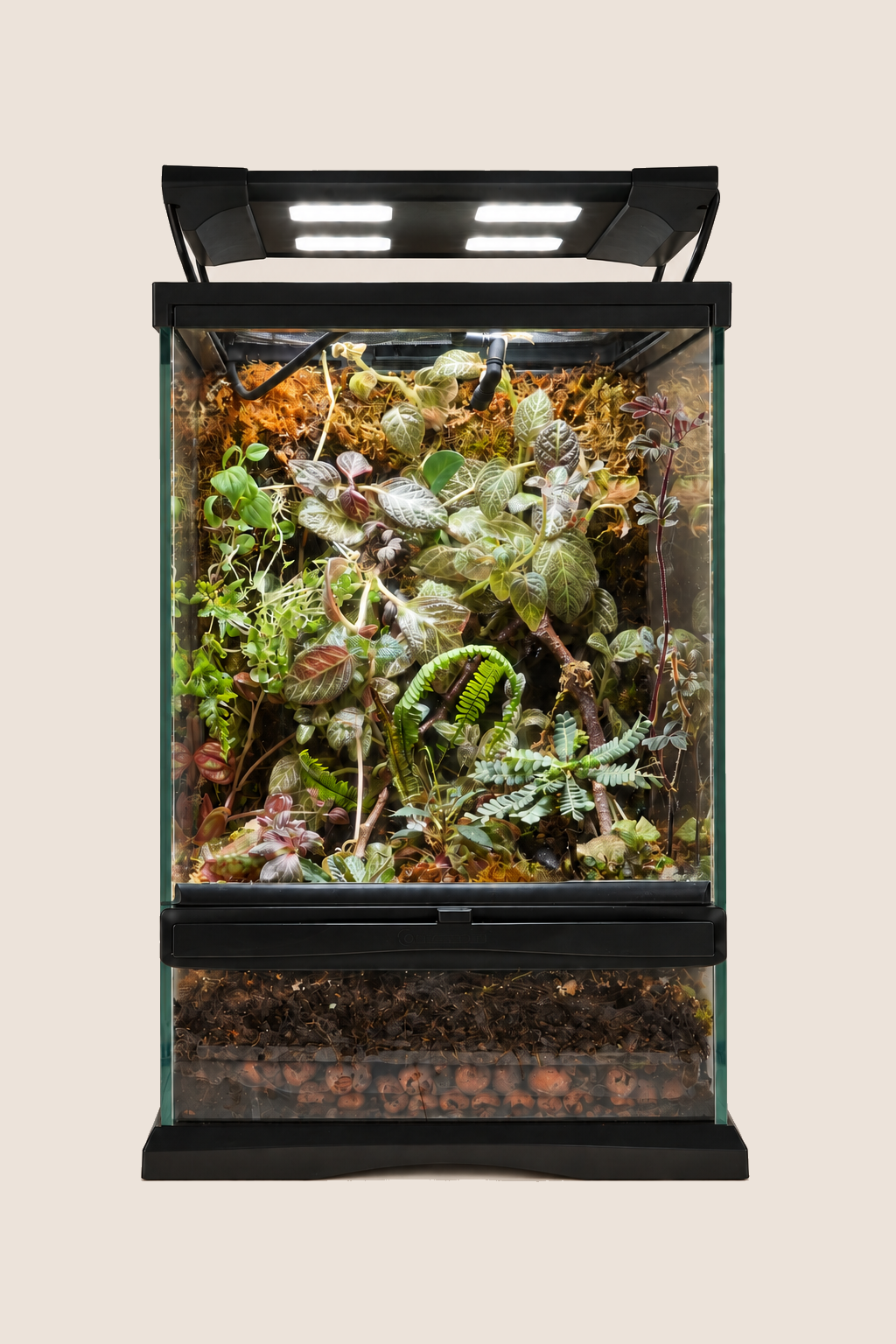
Episcia cupreata hybrid
Biophytum sensitivum
Nautilocalyx pemphidius
Pecluma aff. filicula
Sinningia muscicola ‘Rio das Pedras’
Philodendron hederaceum ‘Micans’ or another miniature velvet Philodendron
Mixed tropical mosses
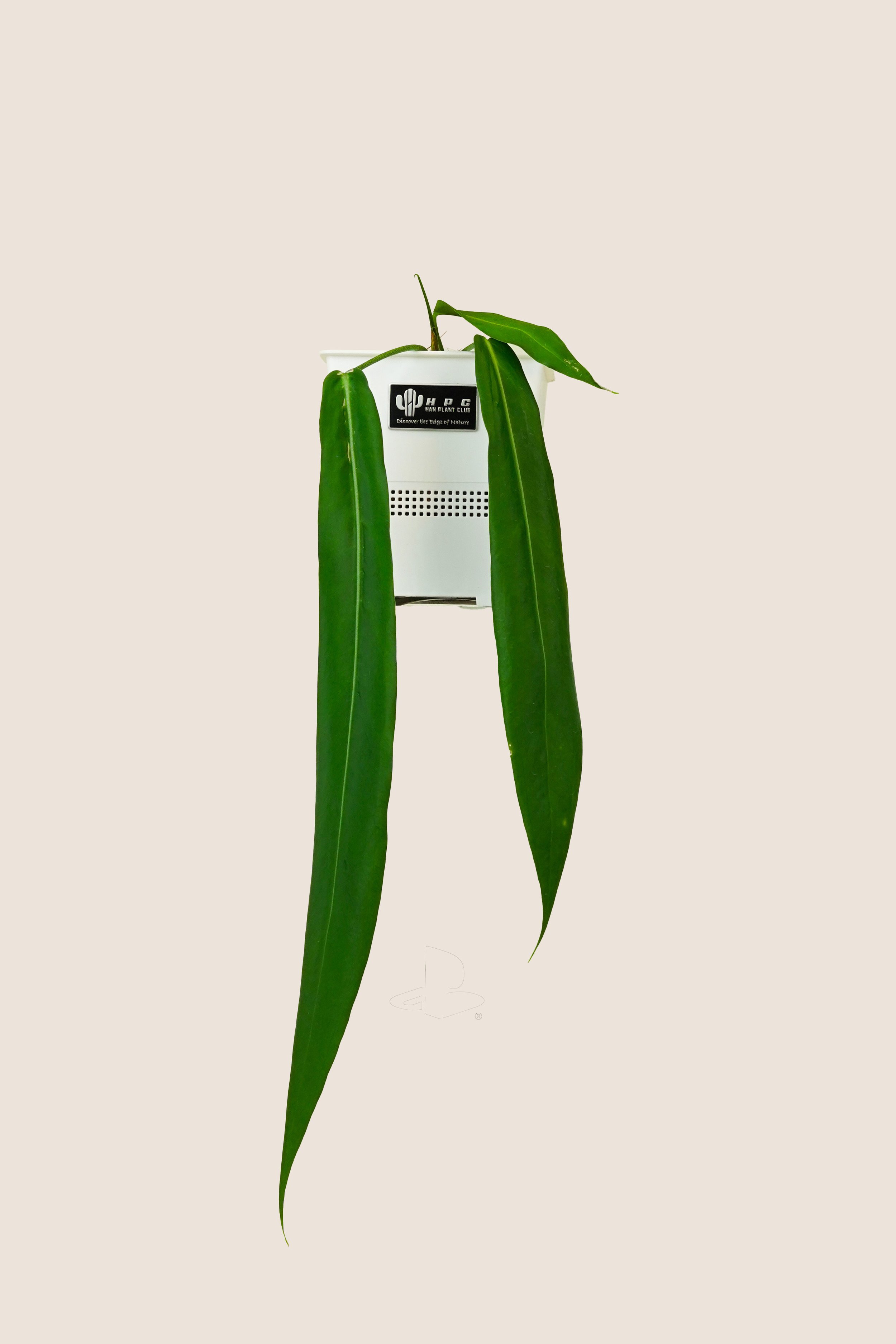
Graceful and otherworldly, Anthurium Pallidiflorum embodies quiet luxury. Its long, cascading leaves unfurl like velvet green ribbons, each one soft to the touch and gently rippled along the edges—elegant even in stillness. Suspended from slender stems, the foliage drapes downward in a slow, dramatic sweep, making it a natural focal point in any refined collection.
Rooted in a 5" HPC pot and nestled in a custom aroid blend, this epiphytic species thrives in bright, filtered light and high humidity. It prefers a gentle rhythm—moist but never wet, admired but never rushed.
More than a tropical plant—it’s botanical poetry in motion, a symbol of grace growing at its own deliberate pace.
Plant images are for illustration purposes only. Actual plant may vary.

Raphidophora pachyphylla Malaysia : Rhaphidophora pachyphylla is a small shingling species from New Guinea. It is quite an aggressive shingler, and is interesting due to the fact that it will grow downward after reaching the top of a vivarium. It adheres to backgrounds quite well, and makes for a nice addition to any vivarium. These Rhaphidophora do well in moderate, indirect light and high humidity.
Begonia ocellata : Native to West Sumatra, this fuzzy-leaved species has at least two distinct forms. One is greenish-purple and spotless, the other is blueish pink with small white polka dots. Each polka dot has a single hair in the middle. Stems are a red and covered in small pink hairs. A trailing species, it will readily branch out in a somewhat angular fashion from the main plant to make a small colony. The epithet of ocellata comes from the array of spots, similar to the pattern of a freshwater ocellate stingray.
Neoregelia Royal Burgundy x fireball : Neoregelia bromeliads are vibrant, hardy medium-sized epiphytes from rainforest canopies, typically growing 8–12″ (20–30 cm). Ideal for humid terrariums or vivariums, they are safe for most amphibians and tropical reptiles.
Racinaea crispa : A small plant (to 6 inches) with a bulbous base and leaves which have endless twists, wrinkles and curls. Green with darker markings, sometimes almost appearing black, with a delicate yellow inflorescence.
Solanum uleanum : Solanum uleanum is a tropical vine native to the rainforests of Brazil, Peru, Colombia, and Ecuador. It is part of the Solanaceae family, which includes a variety of well-known plants, such as tomatoes and nightshades. This species is especially notable for its visually striking foliage. The young leaves of Solanum uleanum emerge in a vivid, almost neon purple, gradually maturing into deep green.
Peperomia sp. Dark Pongo : Peperomia sp. Dark Pongo is a modest-sized terrestrial species from the Yurimaguas lowlands of Peru. Our founding stock originated from a now razed patch of forest that stood near Pongo De Caynarachi. This species grows intermittently throughout the region. It is hard to detect with its dark foliage offering little contrast against the forest floor in the deep shade we most often have found it growing in.
Marcgravia aff. umbellata : Marcgravia aff umbellata is a species native to the Caribbean. This Marcgravia has a beautiful muted white markings and small, shiny green leaves that offer a beautiful, compact look. These vines appreciate lower light while rooting, and will display high levels of phototropism.
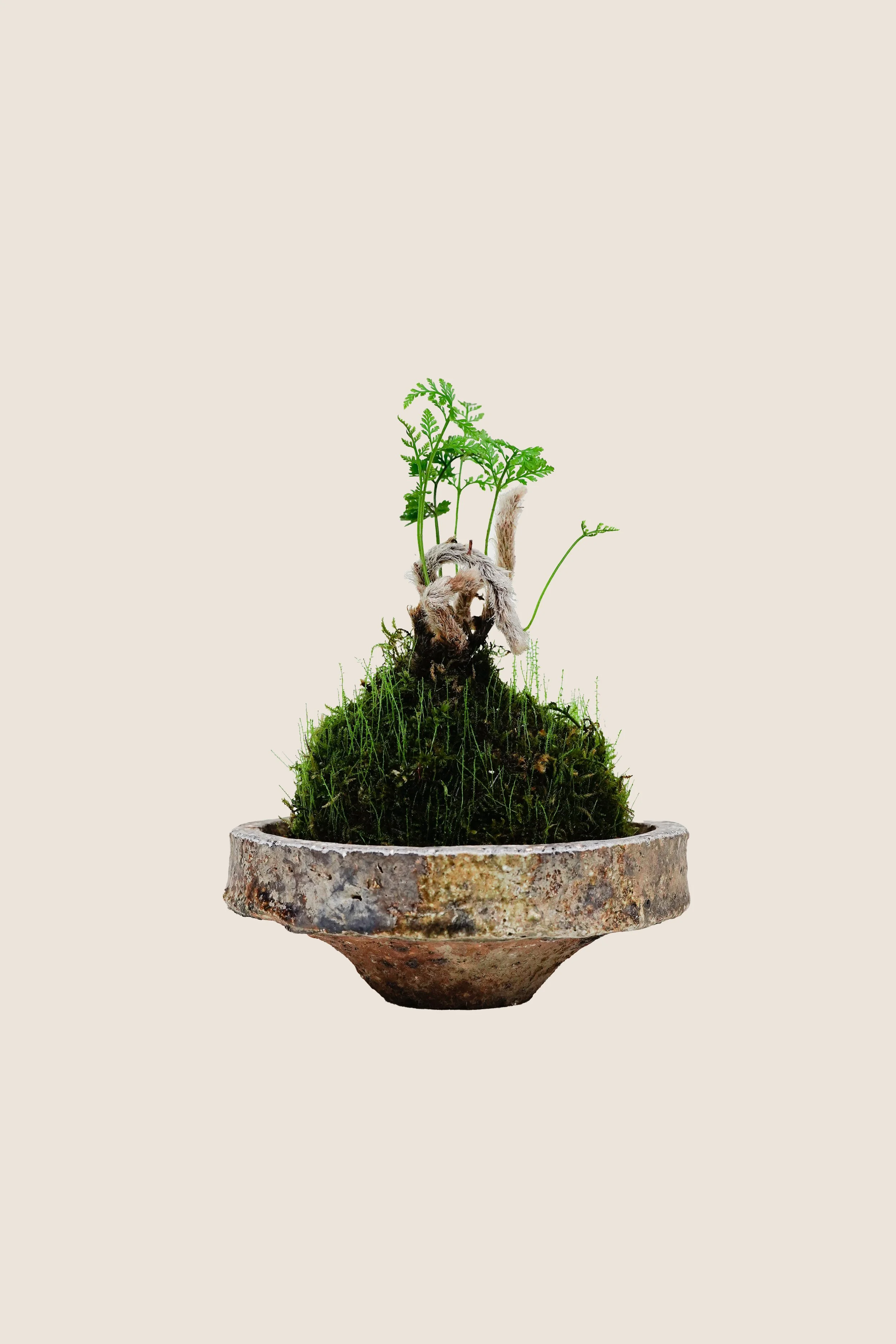
A sculptural ode to nature’s quiet poetry—Wolf's Tail Fern unfurls with soft, trailing fronds that ripple like gentle waves, evoking the wild grace of a forest breeze caught in motion. Its unique texture and cascading form bring movement and stillness into balance—a living embodiment of wabi-sabi.
Cradled in a hand-shaped kokedama moss ball, this piece is rooted in centuries-old Japanese tradition. The fern is thoughtfully placed in a 700-year-old antique vessel, a relic worn by time and touched by history. Cracks, patina, and earthen imperfections tell stories long forgotten, forming a perfect harmony with the delicate, ever-growing foliage.
This is not just a plant—it’s a meditation. A fragment of wilderness paired with ancient craft, designed for those who find beauty in impermanence and seek quiet luxury in the presence of nature.
Best displayed in bright, indirect light with regular misting to preserve humidity and form.
Each arrangement is one-of-a-kind. Actual form may vary due to the natural growth of the fern and the unique character of the antique pot.
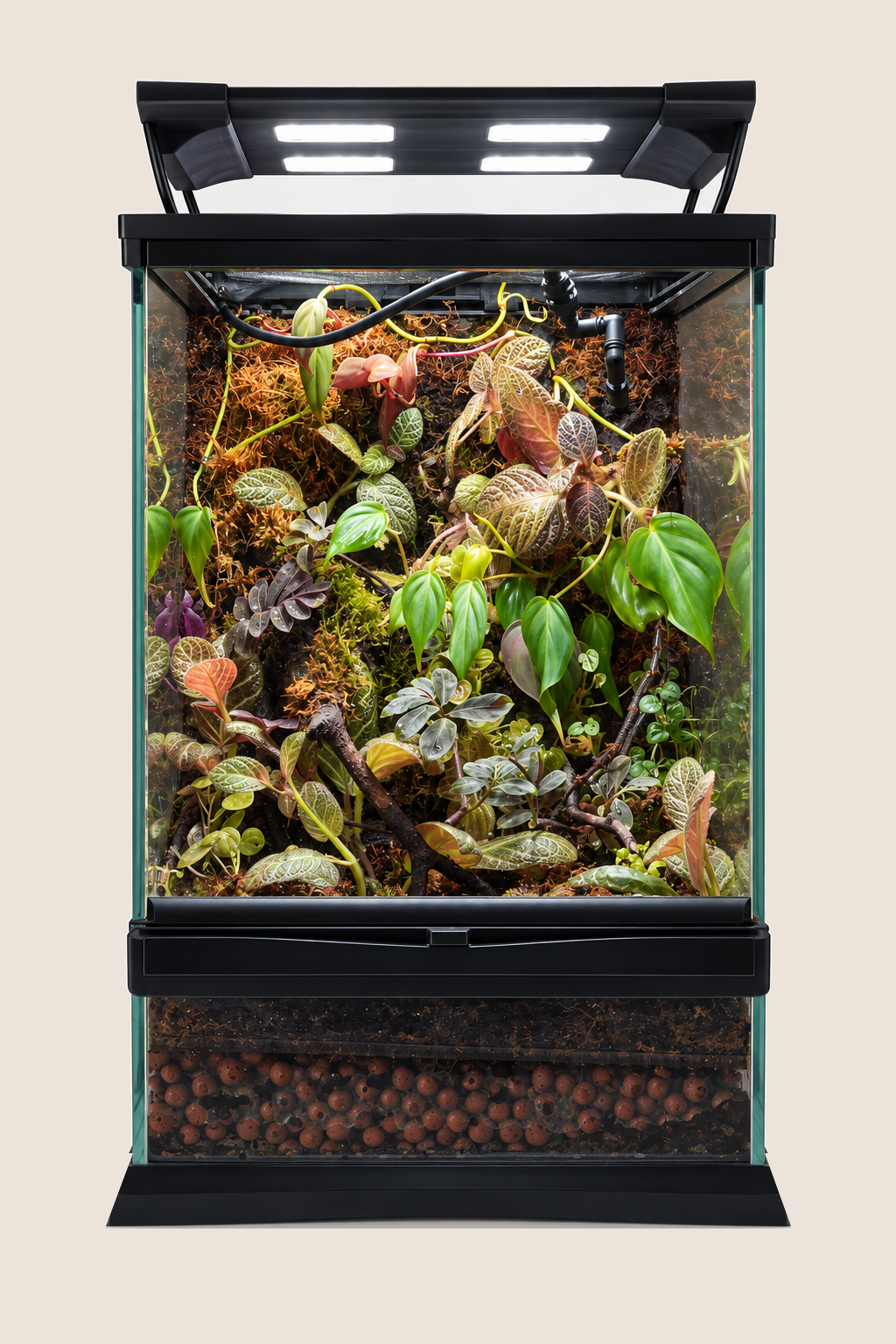
Episcia cupreata hybrid
Philodendron melanochrysum
Tropical mosses and sphagnum moss
peperomia antoniana
peperomia sp. colombia